Rat Terrier Feeding Guide: Portions, Treats and Healthy Weight
How to choose a food, how much and how often to feed, and how to keep a small, active terrier lean.
General education, not veterinary advice. Your own veterinarian knows your dog. If something here worries you, or your dog seems unwell, call them.
Feed a Rat Terrier a complete and balanced dog food for its life stage, in measured meals twice a day, and adjust the amount to keep the dog lean. There is no single correct number of cups, because Rat Terriers range from about 10 to 25 pounds and foods vary widely in calories. What you can do is start from the label, watch body condition, and fine-tune with your vet.
Key points
- Choose a food labeled complete and balanced for your dog’s life stage.
- Measure meals. Free-feeding is a common route to weight gain.
- Adults: two meals a day. Young puppies: smaller, more frequent meals.
- Keep treats under 10% of daily calories.
- Judge by body condition, not the bowl. You should feel ribs easily and see a waist.
Choosing a food
Look for a nutritional adequacy statement on the bag or can saying the food is complete and balanced for your dog’s life stage (growth, adult maintenance, or all life stages) according to AAFCO standards. That statement, not the marketing on the front, tells you the food can be fed as a sole diet.
- Life stage. Puppies need a growth formula. Adults and seniors need fewer calories per pound.
- Kibble size. Many owners find small-breed formulas easier for small mouths; PetMD notes a small-breed formula is appropriate.
- Who makes it. The World Small Animal Veterinary Association publishes guidance on questions to ask a pet food manufacturer, such as whether they employ a qualified nutritionist and test their diets.
- Skin trouble. Because the breed can be prone to skin allergies, some dogs need a particular diet. That is a decision to make with your vet, not by trial and error.
Home-cooked and raw diets are hard to balance and carry their own risks. If you want to go that route, do it with a veterinary nutritionist.
How much to feed
- Start with the feeding guide on the package for your dog’s current, healthy weight.
- Split it into two meals for an adult.
- Measure it with a proper measuring cup or, better, kitchen scales.
- Check body condition every two weeks and adjust by about 10% at a time.
Label guides are averages. An active young adult may need more than the bag suggests; a neutered, older or less active dog often needs less. Your vet can calculate a daily calorie target for your individual dog.
How often to feed
| Age | Typical pattern | Why |
|---|---|---|
| Young puppy | 3–4 small meals a day | Small stomachs; VCA notes very small puppies can be prone to low blood sugar |
| Older puppy | 2–3 meals a day | Follow your vet’s advice on when to reduce |
| Adult | 2 measured meals a day | Steadier appetite and easier weight control than free-feeding |
| Senior | 2 meals, amount reviewed with your vet | Calorie needs and health conditions change with age |
Healthy weight: the hands-on check
VCA observes that Rat Terriers tend to stay at a healthy weight or become slightly overweight, and that small snacks add up quickly in a small dog. Scales help, but body condition tells you more.
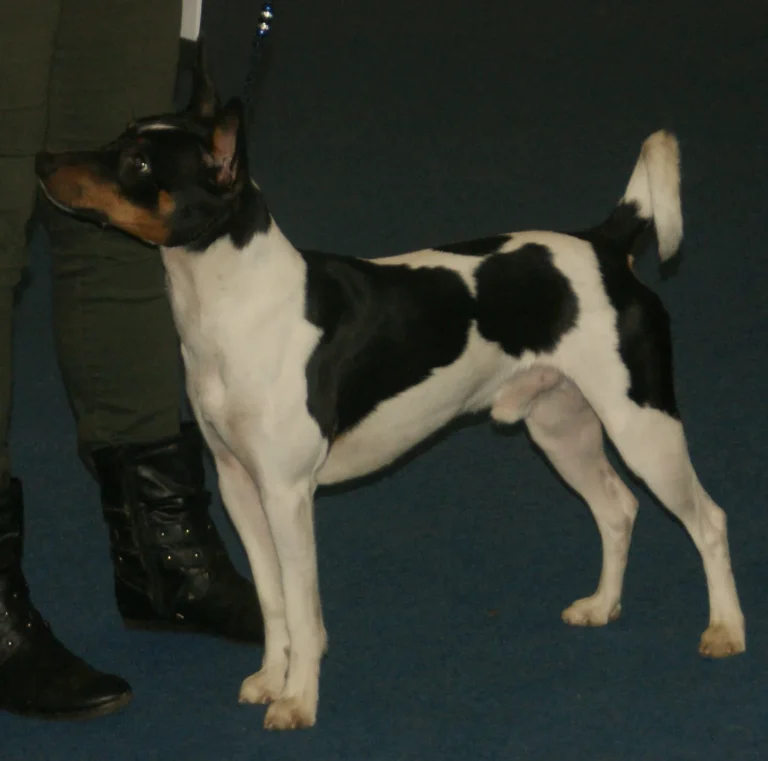
- Ribs. You should feel them easily under a thin layer of fat, without pressing.
- Waist. Looking down from above, the body should narrow behind the ribs.
- Tuck. From the side, the belly should rise from the chest to the hind legs.
Vets score this on a 9-point body condition scale, where 4 to 5 is ideal. Ask yours to show you how at the next visit. If your dog is over, cut the daily amount slightly, trade some treats for praise or play, and recheck in a fortnight.
Treats and training rewards
Rat Terriers train well for food, which makes it easy to overdo. The usual veterinary guideline is that treats should make up no more than 10% of daily calories.
- Use pea-sized pieces. The dog cares about the number of rewards, not their size.
- Take training treats out of the daily food allowance, or use part of a meal as rewards.
- Plain cooked chicken, small bits of carrot or a few pieces of kibble all work.
Foods to keep away from dogs include chocolate, grapes and raisins, onions and garlic, macadamia nuts, alcohol, and anything sweetened with xylitol. If your dog eats something it should not have, call your vet or an animal poison control service straight away.
Feeding problems worth a vet visit
- Refusing food for more than a day, or a young puppy that will not eat.
- Repeated vomiting or diarrhea.
- Unexplained weight loss or gain.
- Constant itching, ear infections, or soft stools that might be diet-related.
Useful feeding equipment
You do not need much: a non-tip bowl, a measuring scoop or scales, and fresh water always available. For a dog that inhales its food, a slow-feeder bowl or puzzle feeder stretches a meal out and adds some mental exercise. Our enrichment guide explains the options, and the Feeding Cost Calculator estimates a monthly food budget.
What to read next
Sources
- PetMD: what to feed a Rat Terrier (veterinarian reviewed)
- VCA Animal Hospitals: Rat Terrier, feeding notes
- AAFCO: understanding pet food
- U.S. Food and Drug Administration: “complete and balanced” pet food
- World Small Animal Veterinary Association: global nutrition guidelines
- VCA Animal Hospitals: body condition scores
- ASPCA: people foods to avoid feeding your pets