Senior Rat Terrier Care: Comfort, Mobility and Vet Checks
How to keep an older Rat Terrier comfortable and active: exercise, warmth, weight, teeth, and the changes your vet should know about.
General education, not veterinary advice. Your own veterinarian knows your dog. If something here worries you, or your dog seems unwell, call them.
Rat Terriers often live well into their teens, so many spend a third of their lives as seniors. An older Rat Terrier usually still wants to do everything it always did. Your job is to let it, comfortably: shorter outings, easier access, warmer rest, closer attention to small changes, and more frequent conversations with your vet.
Key points
- Keep them moving, gently and often. Stopping exercise makes stiffness worse.
- Keep them lean. Extra weight is hard on aging joints and hearts.
- Make the house easier: traction on floors, ramps or steps, a supportive bed, warmth.
- Ask your vet how often a senior should be examined. Twice a year is commonly recommended.
- Slowing down is not “just old age” until a vet has checked for pain and illness.
When is a Rat Terrier a senior?
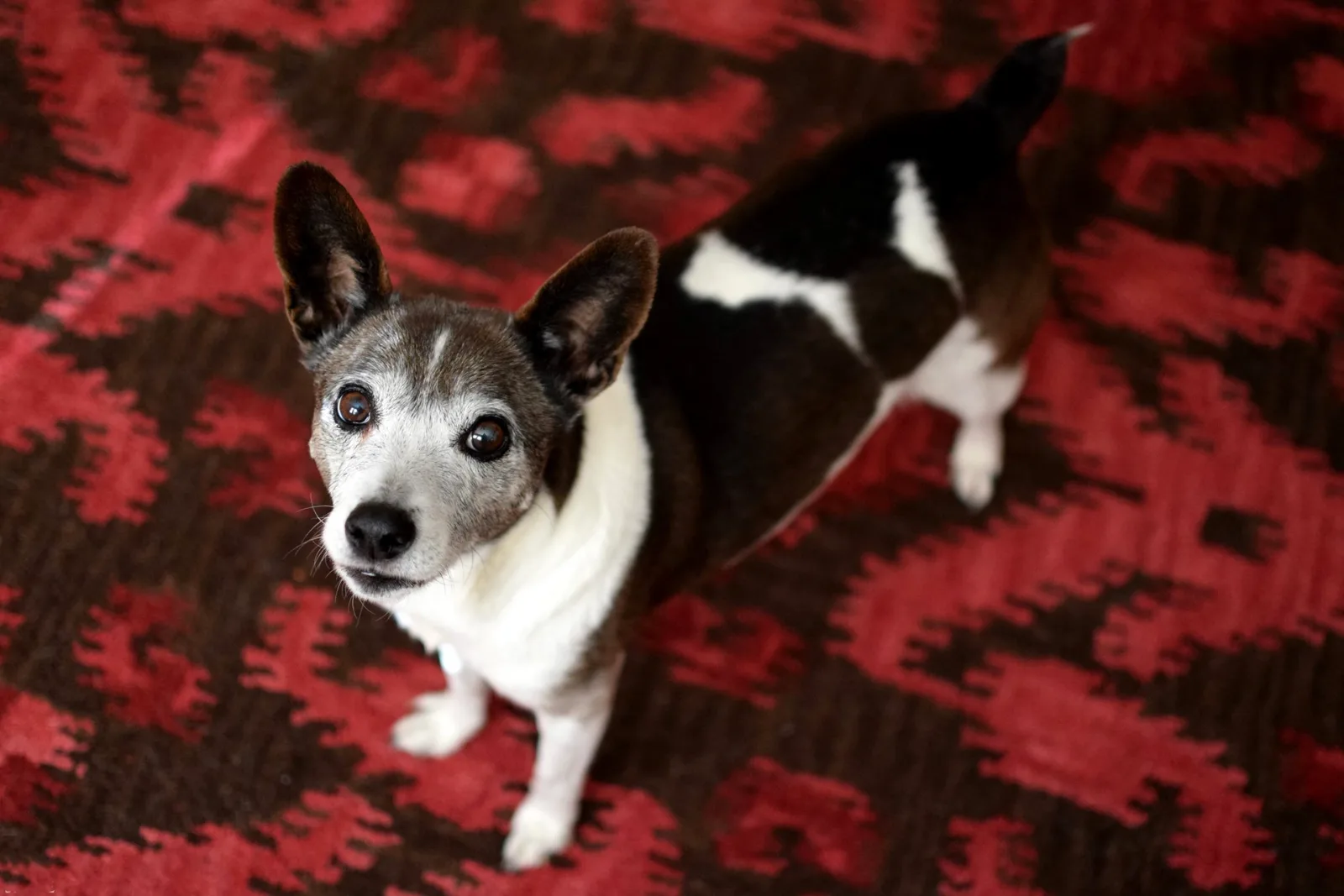
There is no fixed birthday. Small breeds age more slowly than large ones, and veterinary life-stage guidelines generally treat a dog as senior for roughly the last quarter of its expected lifespan. For a breed that is commonly quoted at 12 to 18 years, that puts the start of the senior years at around 10, give or take. Watch the dog rather than the calendar: a greying muzzle, longer naps, hesitation before jumping, or a little cloudiness in the eyes are typical first signs.
Exercise and mobility
- Shorter, more frequent walks on soft, level ground, at the dog’s pace.
- Plenty of sniffing. It is low impact and mentally satisfying.
- Fewer jumps. Lift the dog in and out of the car, and add a ramp or steps to the sofa or bed.
- Warm up and cool down. A few minutes of slow walking at each end.
- Traction. Rugs or runners on slippery floors, and nails kept short so the pads grip.
If your dog is stiff after rest, slow on stairs, or reluctant to walk, see your vet before assuming it is normal aging. Arthritis is common and treatable, and conditions known in the breed, such as luxating patellas and hip problems, can become more troublesome with age. Never give human pain medication; several are toxic to dogs.
Comfort at home
- A supportive bed that is easy to step onto, away from drafts. See our senior comfort guide and bed guide.
- Warmth. VCA notes the breed’s thin coat makes it vulnerable to chilling, and older dogs feel it more. A sweater indoors in winter is practical, not silly.
- Easy access to water, food and the door. Consider night lights if vision is fading.
- Routine. Predictable days help dogs whose sight, hearing or memory is not what it was.
Food and weight
Calorie needs usually fall as activity drops, so a portion that suited a five-year-old may slowly put weight on a twelve-year-old. Check body condition monthly and adjust. Some seniors go the other way and lose weight or muscle, which always needs a vet’s attention. Ask whether a senior diet or a diet for a specific condition makes sense for your dog. Our feeding guide shows how to check body condition.
Teeth
Dental disease builds up over a lifetime, and sore teeth are a common hidden reason for an older dog eating less or becoming grumpy. Keep brushing if you can, and ask your vet to check the mouth at every visit.
Senses and brain
- Vision. A bluish haze is often normal lens aging, but true cloudiness, redness or squinting needs to be seen promptly. Lens luxation is a known problem in the breed.
- Hearing. Teach hand signals early so you can still communicate. Approach a deaf dog where it can see you.
- Cognition. Night-time pacing, getting stuck in corners, staring, or forgetting house training can be signs of canine cognitive dysfunction. Tell your vet; there are ways to help.
Keep the brain working with gentle scent games, easy puzzle feeders and short, cheerful training sessions. Old dogs enjoy learning as much as young ones.
Vet care for seniors
More frequent checkups catch problems while they are still manageable. Useful questions:
- How often should we come in now, and which screening tests do you recommend?
- Can you check for pain in the back, hips and knees?
- Did you hear a heart murmur? Has it changed?
- Is my dog’s weight and muscle condition where you would like it?
- What signs should make me call before the next appointment?
Call your vet promptly for a new cough, faster or labored breathing at rest, fainting, drinking or urinating much more than usual, sudden weight change, new lumps, a painful or cloudy eye, confusion, or any marked change in appetite or behavior.
Quality of life
A simple habit that helps: once a week, note whether your dog is eating, moving, sleeping, and enjoying its favorite things. A written record makes slow changes visible and gives your vet something concrete to work with. Our Health Reminder Tracker can hold those notes privately in your browser.