Toys for a Clever, Busy Rat Terrier: A Buying Guide
Match toys to terrier instincts: puzzle, chew, chase and tug. What to look for, what to avoid, and how to keep toys safe.
Affiliate disclosure: this page contains links to Amazon. As an Amazon Associate I earn from qualifying purchases. It does not change what you pay. Full disclosure.
The toys that hold a Rat Terrier’s interest are the ones that let it do what it was bred for: search, chase, grab, shake and dissect. A good toy box has one or two of each type, sized for a small mouth and a strong jaw, rotated so nothing gets stale. You do not need many. You need the right mix.
We have not tested individual products. This guide explains the types and what to look for, with links to current options.
Key points
- Cover five jobs: puzzle, chew, chase, tug and comfort.
- Size up if in doubt. A toy should be too big to fit entirely behind the back teeth.
- Supervise new toys, and throw out anything cracked, splintered or missing pieces.
- Rotate weekly. Familiar toys become interesting again after a break.
- Food-dispensing toys count toward the daily food allowance.
Match the toy to the instinct
| Instinct | Toy type | When to use it |
|---|---|---|
| Search and forage | Puzzle feeders, snuffle mats, treat balls | Mealtimes, rainy days, time alone |
| Chew | Rubber chew toys, stuffable toys | Settling down, teething, evenings |
| Chase | Small balls, flirt poles | Short, active play sessions with you |
| Grab and shake | Tug toys, crinkle or squeaky toys | Interactive play, training rewards |
| Comfort | Soft toys | Bedtime, if your dog does not shred them |
The types in detail
Puzzle feeders and treat-dispensing toys
Best for: Mental exercise and slowing down fast eaters
Advantages
- Turns a meal into ten minutes of problem-solving
- Good for time alone
- Adjustable difficulty on many designs
Limitations
- Clever dogs outgrow easy levels quickly
- Needs washing after use
Start at the easiest setting so your dog wins quickly, then make it harder.
Stuffable rubber chew toys
Best for: Calm chewing and crate time
Advantages
- Durable and easy to clean
- Can be filled with part of a meal and frozen
- Encourages settling
Limitations
- Wrong size is a choking risk
- Some dogs lose interest once it is empty
Choose the size for your dog's weight and check it regularly for damage.
Flirt pole
Best for: A safe outlet for chase drive
Advantages
- Big energy burn in a small space
- Great for practicing drop and wait
- Lets a prey-driven dog chase legally
Limitations
- High impact: keep sessions short
- Not for young puppies or dogs with joint problems
Play on grass, keep the lure low to avoid jumping, and build in pauses.
Tug toys
Best for: Interactive play and training rewards
Advantages
- Builds a strong play bond
- Works as a reward where food cannot be used
- Teaches self-control with clear rules
Limitations
- Needs you to play
- Put away between sessions so it stays special
Teach a reliable drop first. Tug with rules does not cause aggression.
Balls and fetch toys
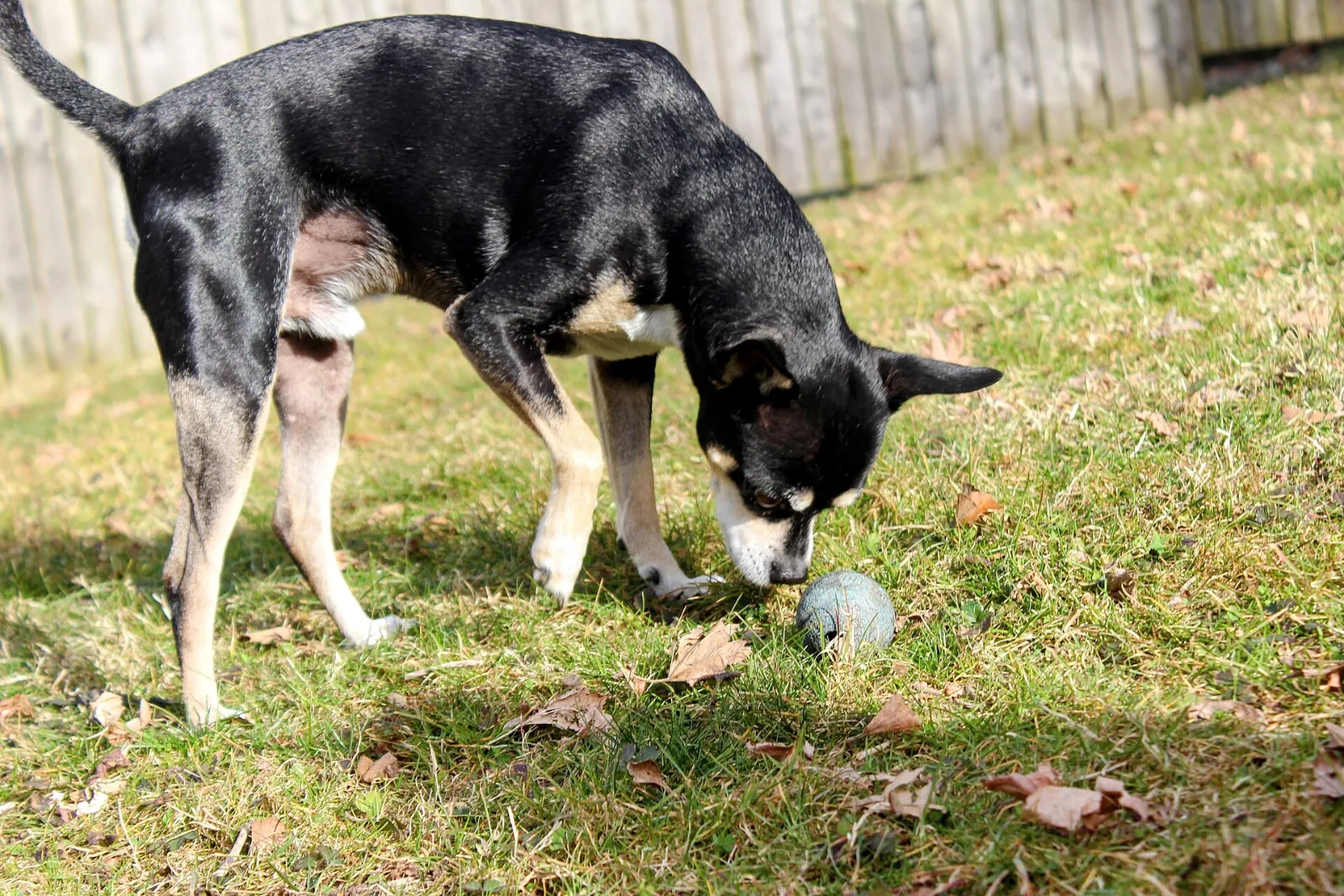
Many Rat Terriers love a ball. Choose one that is large enough not to lodge in the throat and avoid anything small and slippery. Standard tennis balls are abrasive on teeth with heavy use and are on the large side for a miniature; smaller rubber balls made for small dogs are a better choice. Browse small-dog fetch balls on Amazon (Amazon affiliate link, opens in a new tab).
Squeaky and soft toys
The squeak mimics prey, which is exactly why terriers are so keen to find and remove it. If your dog dissects soft toys, treat them as supervised play only, and take away stuffing and squeakers before they are swallowed. Some owners buy unstuffed “flat” toys for this reason.
What makes a toy safe
- Right size. Too big to swallow, small enough to carry.
- Some give. A common veterinary rule of thumb: if you cannot dent it with a thumbnail, it may be hard enough to break a tooth.
- No small glued-on parts such as eyes or bells.
- Easy to clean. Food toys need washing after every use.
- Inspect often. Replace anything cracked, frayed or missing chunks.
Call your vet if you think your dog has swallowed part of a toy, especially if it vomits, stops eating, strains, or seems uncomfortable. Blockages are emergencies.
A starter toy box
- One puzzle feeder or treat ball
- One snuffle mat
- Two stuffable chew toys, so one can be in the freezer
- One tug toy
- Two or three small fetch balls
- One flirt pole, for adult dogs
Keep half out and half in a cupboard, and swap them each week.
Puppies and seniors
Puppies need softer rubber made for teething, and close supervision. Seniors often prefer gentler puzzles, softer chews, and scent games over high-impact chase. See senior care.