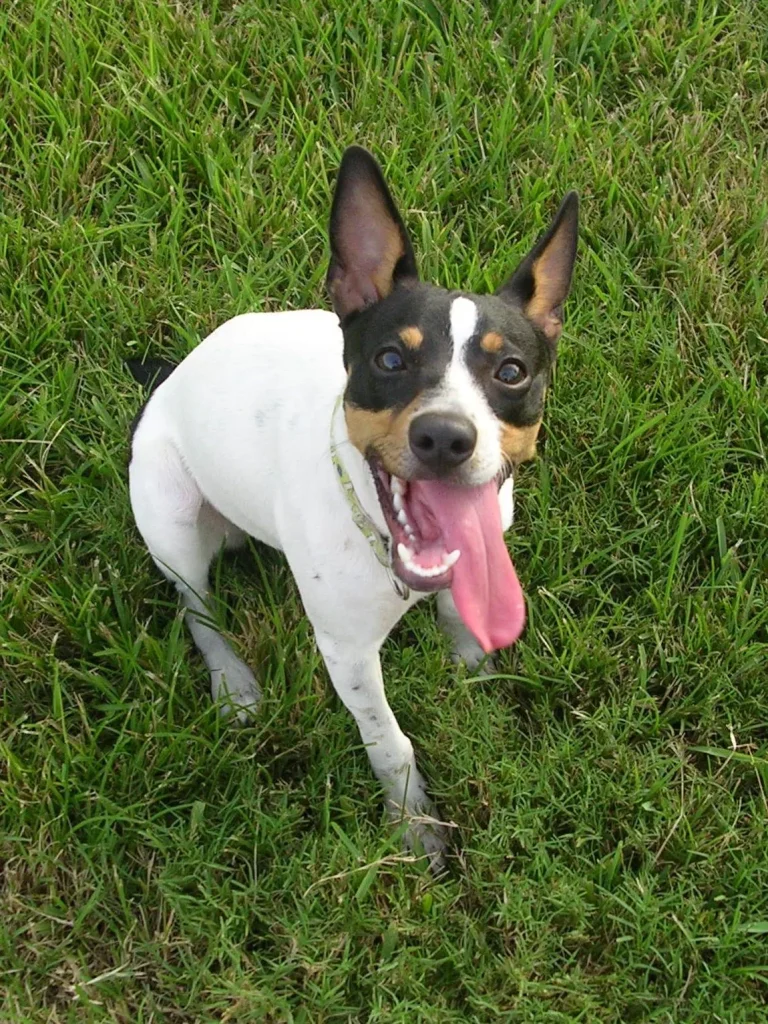
Rat Terrier Health Questions to Discuss With Your Vet
The conditions most often seen in Rat Terriers, the screening tests the breed club recommends, and the questions worth asking your vet.

General education, not veterinary advice. Your own veterinarian knows your dog. If something here worries you, or your dog seems unwell, call them.
Rat Terriers are generally healthy, long-lived dogs, but like every breed they have a handful of conditions that turn up more often than average. You do not need to diagnose anything yourself. What helps is knowing which questions to bring to your veterinarian and which signs mean you should not wait for the next routine visit.
This article is a conversation starter, written from veterinary and breed-club sources. It cannot tell you what is going on with your own dog.
Key points
- Conditions most often listed for the breed: luxating patella, hip dysplasia, Legg-Calvé-Perthes disease, primary lens luxation, heart disease, and skin allergies.
- The AKC lists four screening tests recommended by the national breed club: patella evaluation, hip evaluation, cardiac exam, and a primary lens luxation DNA test.
- A suddenly painful, red or cloudy eye is an emergency.
- Dental care and weight control are the two everyday things owners influence most.
Questions for a routine checkup
- Is my dog at a healthy weight and body condition? What daily calorie target would you suggest?
- Which vaccines and parasite preventives make sense for where we live and how we live?
- How do my dog’s teeth look, and when would you recommend a professional cleaning?
- Can you check the kneecaps and hips, and listen to the heart, at each visit?
- Is there anything about my dog’s eyes I should watch?
- How often should we come in at this age?
Knees and hips
Luxating patella
The kneecap slips out of its groove. VCA explains that it is common in small breeds. The classic sign is a dog that suddenly skips or carries a back leg for a few steps, then carries on as normal. Mild cases may only need monitoring and weight control; more severe ones can need surgery.
Ask: What grade is it? Does it need treatment now? What exercise is sensible?
Legg-Calvé-Perthes disease
The head of the thigh bone loses its blood supply and breaks down, causing pain and lameness. It typically appears in young, small-breed dogs and is diagnosed with X-rays. PetMD notes that treatment is often surgical and that dogs usually recover well.
Ask: My young dog is limping on a back leg. Should we X-ray the hips?
Hip dysplasia
The hip joint forms loosely and can become arthritic over time. Signs include stiffness, reluctance to jump, and a “bunny hop” when running.
Ask: Would keeping my dog lean help? Are joint supplements or pain relief appropriate? PetMD suggests raising joint supplements with your vet rather than choosing one yourself.
Eyes: primary lens luxation
Primary lens luxation (PLL) is an inherited condition, seen in several terrier breeds, in which the fibers holding the lens in place weaken and the lens shifts. It can lead to glaucoma and blindness if it is not treated quickly. A DNA test exists, which is why the breed club recommends that breeding dogs are tested.
Treat as an emergency: an eye that is suddenly red, cloudy or bluish, squinting, tearing, obviously painful, or a dog that is suddenly bumping into things. Call your vet or an emergency clinic the same day.
Ask: Do we know my dog’s PLL status from the breeder? If not, is testing worthwhile? What should I watch for at home?
Heart
Heart disease, including mitral valve disease, becomes more common as small dogs age. Often the first sign is a murmur your vet hears before you notice anything at home. Later signs can include coughing, tiring easily, faster breathing at rest, or fainting.
Ask: Did you hear a murmur? If so, what grade, and do we need chest X-rays or an echocardiogram? Should I count resting breathing rate at home?
Skin and allergies
PetMD describes the breed’s skin as sensitive and prone to chronic allergies. Itching, licking paws, red bumps, hair loss and repeated ear infections all deserve a diagnosis, because the causes (fleas, food, environment, infection) are treated differently.
Ask: What is the most likely cause? Do we need skin tests or a diet trial? What can I safely use for itch relief?
Teeth
Dental disease is one of the most common problems in small dogs and it is largely preventable. Daily brushing with dog toothpaste is the gold standard. See our grooming guide for a routine.
Ask: How much tartar and gum inflammation do you see? When should we schedule a cleaning? Which home-care products do you trust?
Weight
Extra weight makes every joint and heart problem on this page harder to manage. VCA notes that small snacks can cause weight problems in very small dogs. Our feeding guide explains how to check body condition at home.
If you are getting a puppy
The AKC lists the health tests the national breed club recommends for Rat Terriers used for breeding. A responsible breeder should be able to show you results for both parents.
| Recommended test | What it looks for |
|---|---|
| Patella evaluation | Loose kneecaps |
| Hip evaluation | Hip joint conformation |
| Cardiac exam | Murmurs and other signs of heart disease |
| PLL DNA test | The gene variant linked to primary lens luxation |
Results can be recorded with the Orthopedic Foundation for Animals. A health-tested pedigree lowers risk but is not a guarantee. More in our adoption and breeder checklist.
When not to wait
Contact a vet urgently for difficulty breathing, collapse or fainting, a seizure, a painful or suddenly cloudy eye, repeated vomiting or diarrhea, a swollen or painful belly, sudden severe lameness, or if you think your dog has eaten something toxic.
Keeping notes helps you give your vet a clear history. Our Health Reminder Tracker stores vet visits, vaccines and questions privately in your browser.
Sources
- American Kennel Club: Terrier Group health testing requirements
- Rat Terrier Club of America: health and genetics
- PetMD: Rat Terrier health issues (veterinarian reviewed)
- VCA Animal Hospitals: luxating patella in dogs
- VCA Animal Hospitals: Legg-Calvé-Perthes disease in dogs
- VCA Animal Hospitals: hip dysplasia in dogs
- VCA Animal Hospitals: lens luxation in dogs
- VCA Animal Hospitals: mitral valve disease in dogs
- Orthopedic Foundation for Animals: CHIC program